
What should a drainage written scope include?
Before agreeing to yard drainage work in Lexington or the Piedmont Triad, confirm both what will be done and where the water is intended to go. A proposal that only says “install drainage” leaves important questions unanswered.
Solid Solutions Construction offers French drains, surface drainage and downspout extensions. This checklist helps you discuss a proposed project, not choose a universal system. The appropriate approach depends on the actual property. Ask for unresolved details to be clarified in writing before agreeing to the work.
1. Record the observed problem and water source
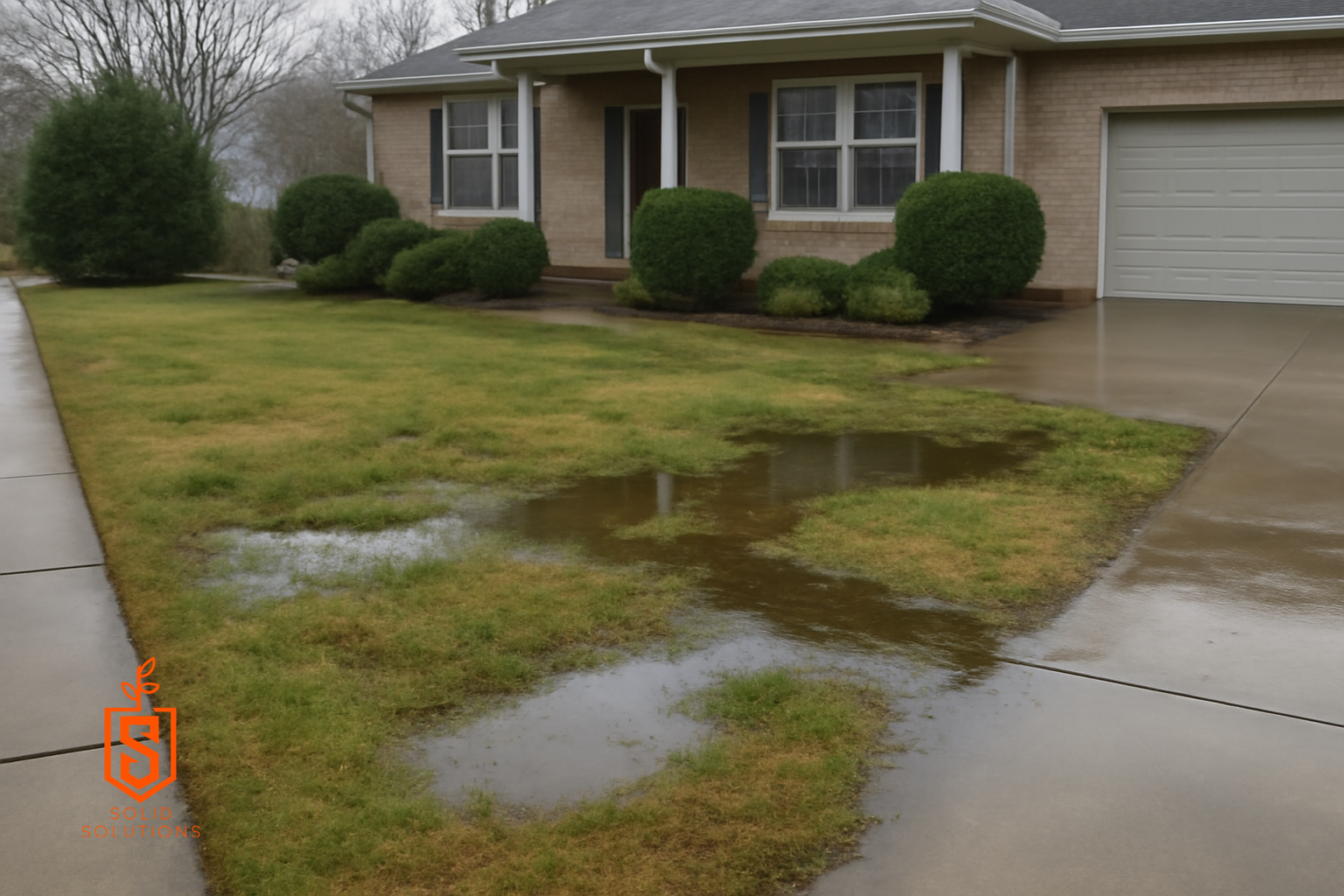
Describe where water enters, collects and leaves, when it happens, and how long it remains. Note nearby downspouts, paved areas and the parts of the yard affected. From a safe position, take photos or a short video during or soon after rain.
Ask the scope to distinguish what has been observed from what still needs assessment. A puddle shows where water collects, but does not by itself establish the source or the right solution. If roof water and yard runoff are both concerns, ask which problem the proposed work addresses.
2. Identify the proposed work and affected areas
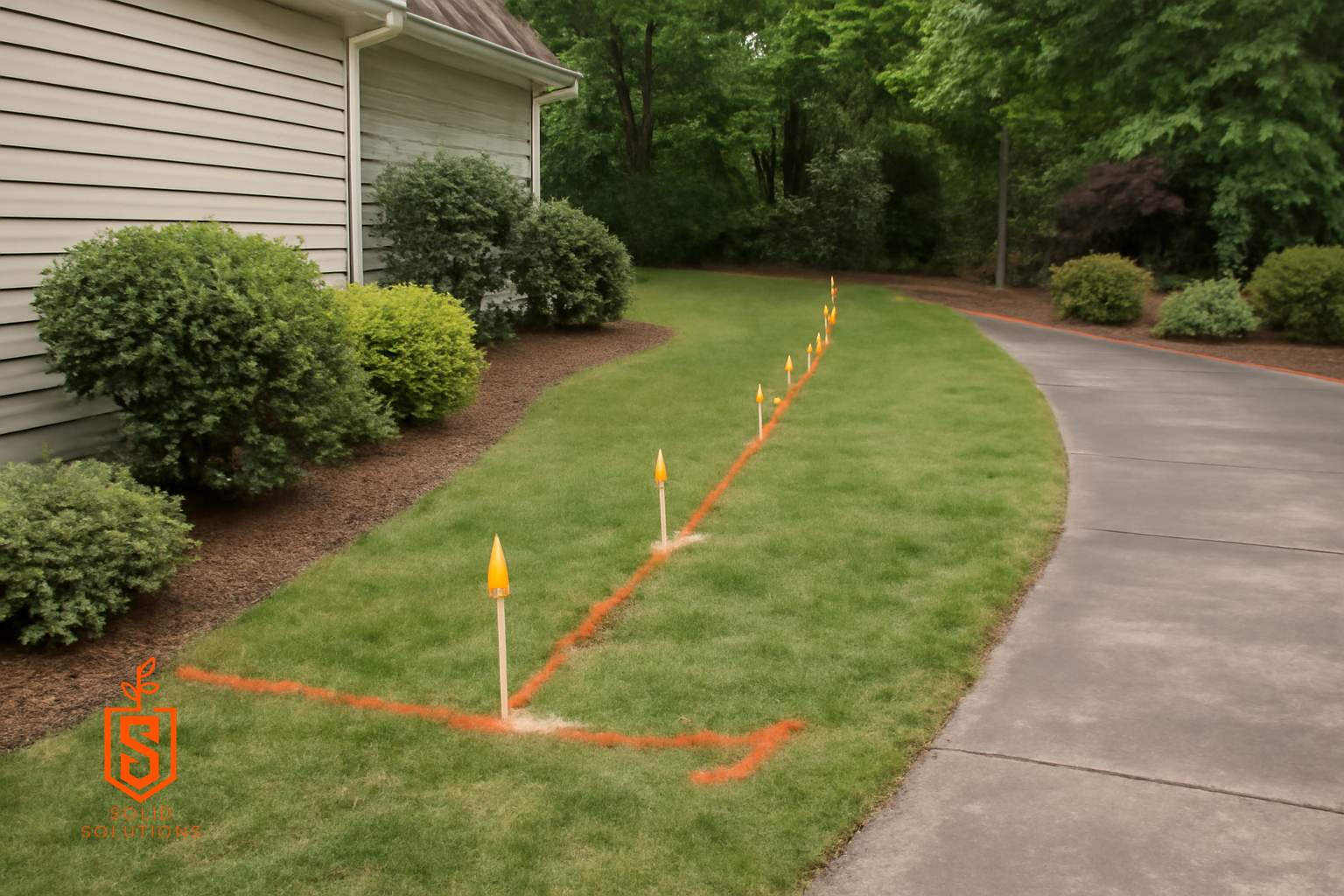
Confirm whether the proposal includes a French drain, surface drainage, downspout extensions or a combination. Ask for the planned route and affected areas to be identified clearly enough that you and the contractor are discussing the same locations. A written description or marked sketch can help.
Ask why the proposed approach fits the observed problem. A French drain is a subsurface option, surface drainage addresses water at ground level, and downspout extensions move roof water beyond the immediate downspout area. Suitability, layout and any specifications need property-specific assessment rather than a standard prescription from this guide.
3. Confirm the intended discharge location
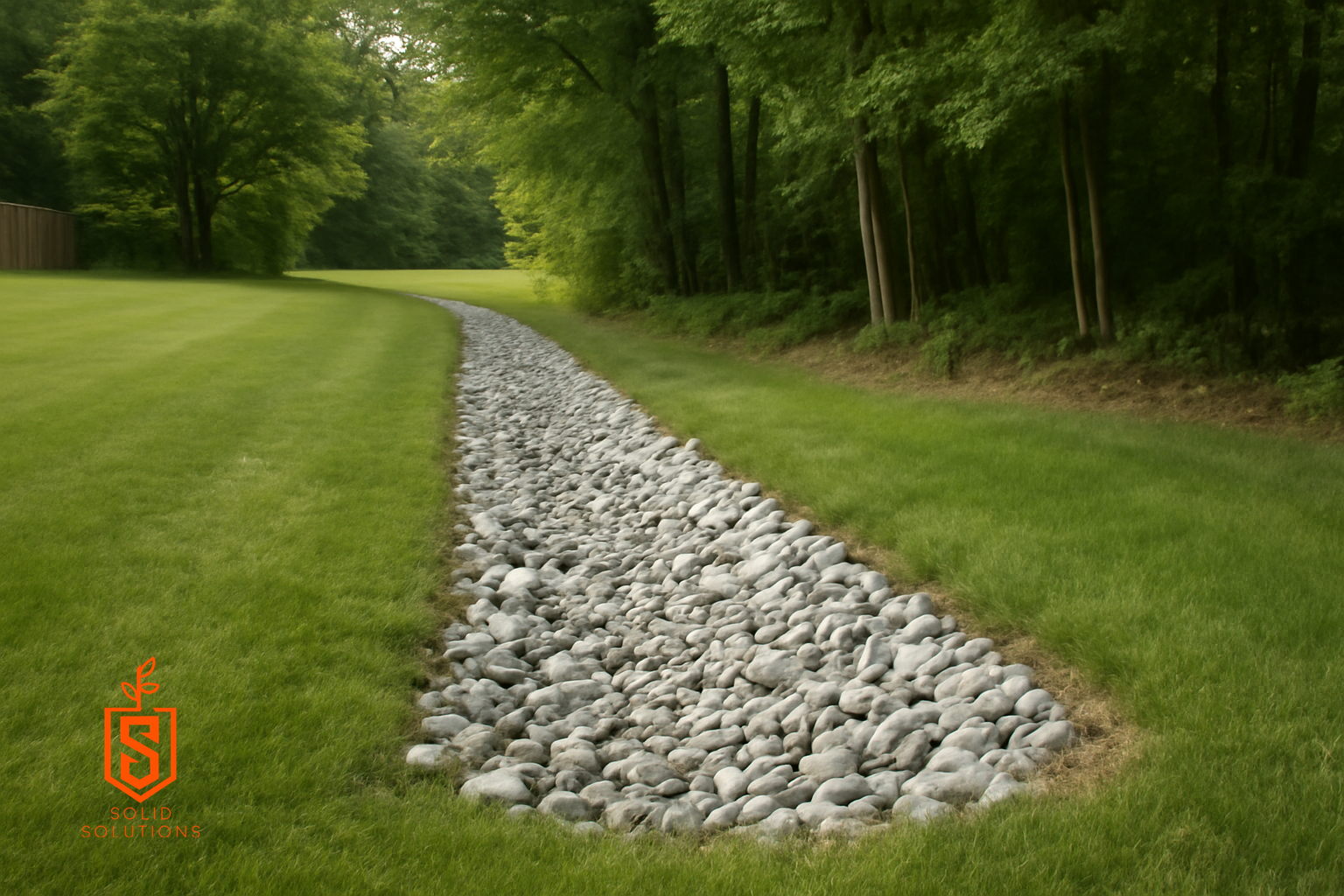
Ask where the collected or redirected water is intended to discharge. Confirm the outlet location, not just the starting point or route. If the outlet has not been settled, ask what must be checked before that part of the plan can be agreed.
Do not treat a proposed outlet as proof that discharge there is permitted. Ask whether any permissions or restrictions need confirmation and who is responsible for resolving them. Any uncertainty involving a property boundary or an area outside your property should be discussed before work is authorized.
4. Clarify access, disturbance and surface restoration
Ask where access is needed and which lawn, planting or paved areas may be disturbed. Discuss gates, fences and nearby features that could affect the planned route. Confirm what you need to move or make accessible before work starts.
Have the scope state what surface restoration includes and excludes. Ask how disturbed areas will be left and whether lawn or planting restoration is part of the proposed work. If drainage is being considered alongside a driveway, walkway or slab, discuss both together and make the boundaries of each part clear.
5. List exclusions and agree on a completion review
Ask which water problems, areas and related tasks are outside the proposal. Confirm how an unexpected condition or a requested change would be discussed and documented before additional work proceeds. Avoid assuming that nearby work is included simply because it relates to the same wet area.
Ask how you will review the completed work against the agreed scope. Topics to confirm include the installed route, outlet, affected surfaces and any follow-up questions. Distinguish reviewing the agreed work from a promise that every future water problem will be eliminated.
Discuss your property and confirm the scope in writing
Bring your town, rainfall observations, photos and questions to the conversation. Use this checklist to identify missing details, not to diagnose the property yourself.
Call Solid Solutions Construction at (336) 541-4965 to discuss your actual property in Lexington or the Piedmont Triad. Before agreeing to drainage work, confirm the proposed work, intended outlet, access, restoration and exclusions in writing.